Safety Interlocks and Electrical Lockouts
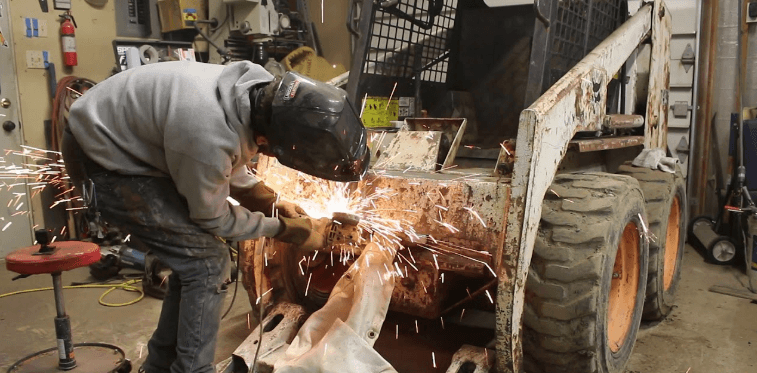
A skid steer that won't turn over is the fastest way to turn a busy jobsite into an expensive lawn ornament. Before you panic and call a mobile service truck, start with the basics. Modern skid steers are loaded with safety sensors that will shut down the starting circuit if any condition is unsafe.
Check the seat bar. If the safety sensor doesn't register that the seat bar is fully locked down, the starter motor will not engage. Similarly, check the seat belt switch, door latch sensors (if cab-equipped), and parking brake. Over time, mud, grease, and Wasatch dust build up on these switches, preventing contact even when you are sitting in the cab.
If the safety switches are fine but you get dead silence when turning the key, check the battery terminals. Heavy vibrations rattle terminals loose, and damp Utah weather causes corrosion. Clean the terminals, check the ground cable at the chassis, and check the starter relay fuses in the main fuse panel.
Fuel Delivery Failures: Cranking But Not Firing
If the engine cranks over strongly but refuses to catch, your starter is doing its job, but you are not getting fuel. Diesel engines require clean fuel, high compression, and exact timing. In the field, the most common fuel killer is contamination.
Clogged fuel filters are public enemy number one. On dusty jobsites in Tooele or West Valley, fine silica dust finds its way into fuel tanks during refills. If you haven't changed your primary or secondary fuel filters in the last 250 hours, swap them out. If you suspect bad fuel or water in the water separator, drain the separator bowl.
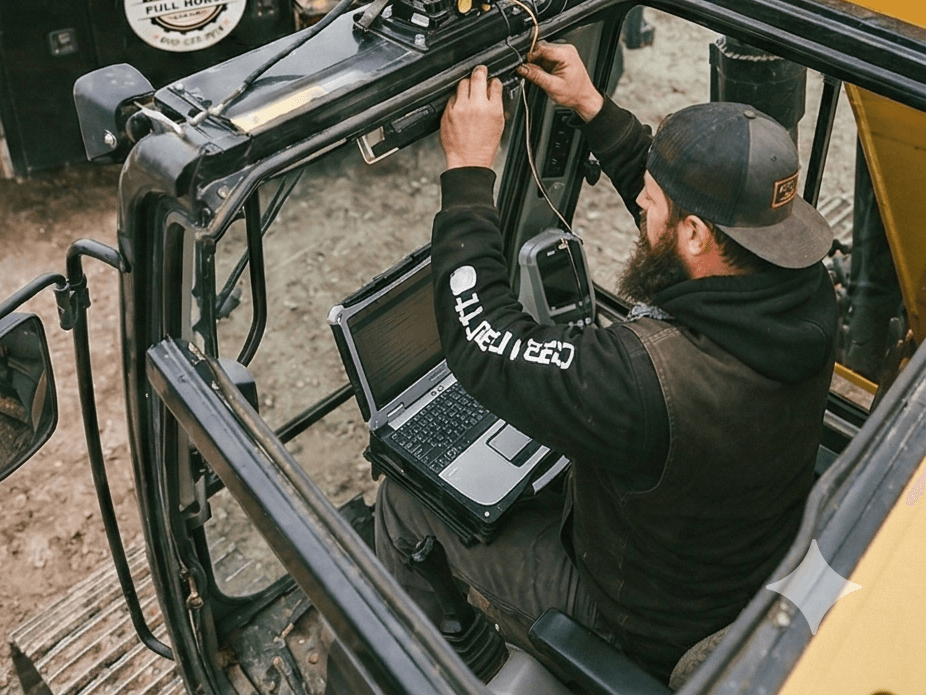
On Tier 4 emission machines, a serious DEF/SCR system fault can trigger an engine derate or complete starter lock. Look at the digital dash display for active warning codes. If you see code codes related to DEF quality or diesel particulate filter (DPF) soot load, the ECU might be keeping the engine locked in safety mode.
The Hidden Culprit: Hydraulic Lockout

Here is the scenario that puzzles most operators: the battery is fully charged, safety bar is down, and the starter clicks once but cannot turn the engine over. It feels like a locked-up engine or a failed starter motor. But 9 times out of 10, the engine is actually suffering from a 'hydraulic lock.'
If the auxiliary hydraulic switch is clicked into the 'continuous flow' position (engaged), or if a button is stuck on the joystick, the hydraulic pump will try to build pressure the second the crank rotates. Because the oil cannot flow (since no attachment is active or the lines are blocked), the pump builds maximum pressure instantly. The starting motor is not strong enough to rotate the engine against 3,000+ PSI of hydraulic resistance.
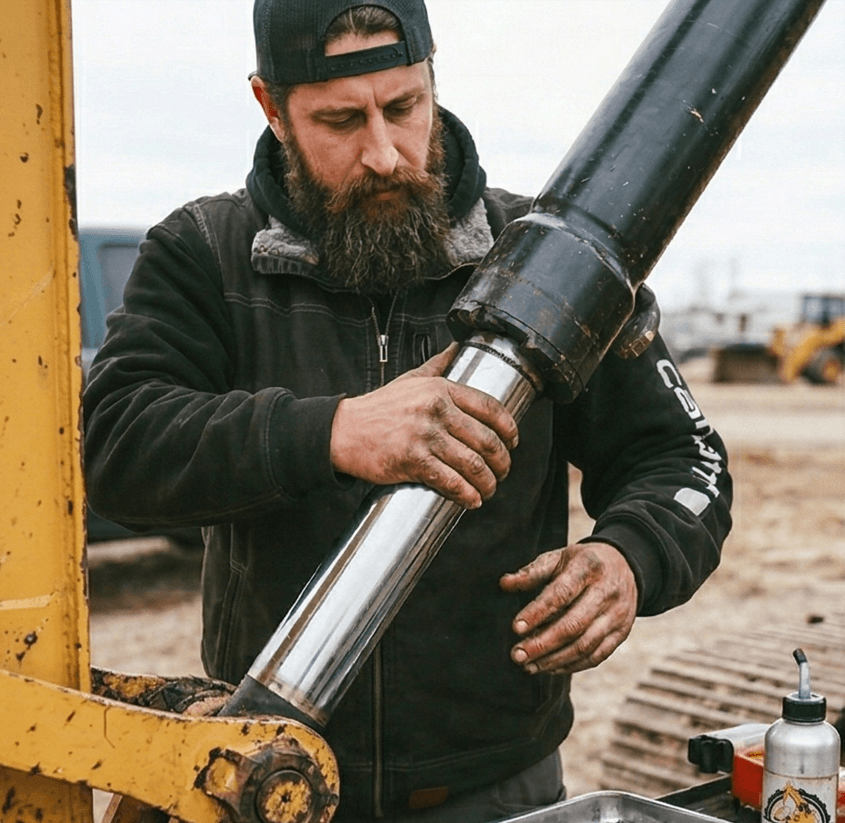
Before you call us, relieve the pressure: confirm the auxiliary hydraulic controls are in neutral. Unplug any attachments from the quick-couplers and verify the couplers are clean. Often, simply toggling the auxiliary hydraulics off is all it takes to make the starter rotate freely again.
Need repair help fast?
Tell us your project details, location, and symptoms. We’ll follow up quickly to confirm scope and scheduling.